Ownership Changes What Counts as a Skill: The Complete Loop
Last week I wrote about the T-shaped engineer making a deliberate choice about where to go deep. But there’s something that comes before that choice—something that changes what “depth” even means. It’s the difference between knowing a system and owning a complete user loop through that system.
I spent my first six years as a mobile engineer. I knew iOS deeply. I could reason about memory, threading, animations, the whole platform. But there was a hard boundary: the API. The backend team owned what lived past that boundary. I could see the effects of their decisions—response times, data consistency, payment logic—but I lived in a different domain. Knowledge stopped at the edge.
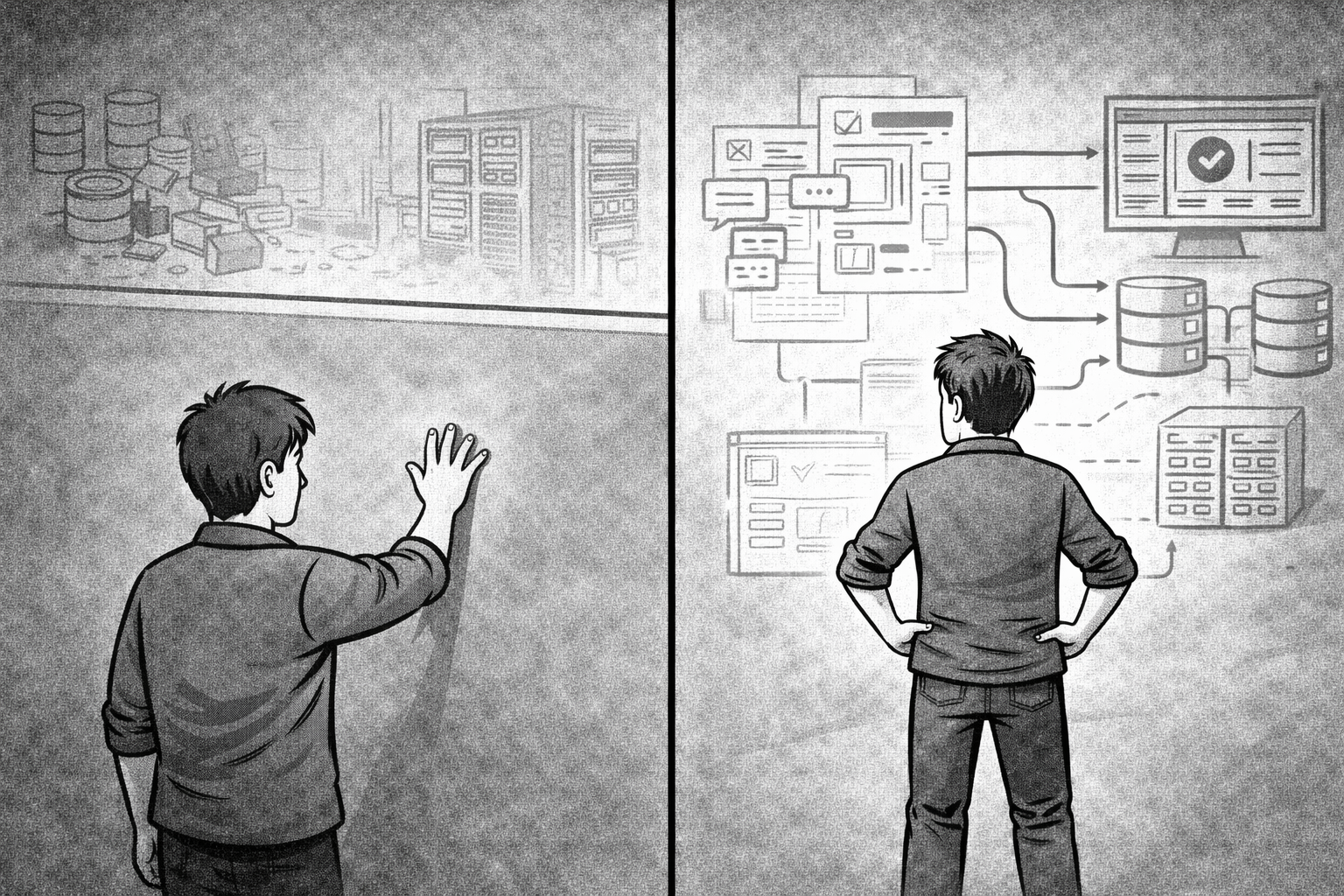
Then, for the last 18 months, I did both sides. I shipped ClickNBack’s backend. I handled wallet constraints, audit trails, reconciliation, all the things I used to receive as data from an API. And something shifted. It wasn’t just “now I know backend too.” It was that knowing a system from both sides of its boundary makes you reason about it completely differently.
The Credibility of a Complete Loop
Here’s what I mean by concrete example: I used to think about API design from a consumer’s perspective. “Give me what I need, keep it simple.” That’s real, but it’s incomplete. Now I think about API design from the producer’s perspective too. What queries does this enable? What invariants does it protect? Where does this decision create future rigidity?
I can’t unsee that. And it’s not because I’m smarter than I was. It’s because I’ve experienced both sides of the boundary. One half of the conversation. When you own the loop—when the user experience and the system that creates it both live in your head—your judgment becomes different. More grounded.
Why Complete Ownership Matters for Your Value
In hiring conversations, this is invisible on a resume. You list “backend” and “iOS” and the recruiter nods. But the real signal isn’t in the list. It’s in whether you’ve held a complete user workflow in your mind at once. Whether you’ve shipped something where you made every decision from user intent to production operation. That’s structurally different from “I’m good at Backend” or “I’m good at iOS.”
The market, increasingly, is looking for people who can think this way. Not because they want full-stack developers doing mediocre work across the whole stack. But because people who’ve owned a complete loop make better decisions about complexity. They know what matters. They don’t add abstraction layers that feel clever but serve no actual user. They understand how a UI decision cascades into data consistency requirements.
That’s not a skill you gain from depth alone. You gain it from ownership. From being responsible for the whole thing, not parts of it.
The Accumulation
Here’s what I’m realizing: A senior iOS engineer who has spent 1+ years shipping a production backend is not the same iOS engineer. I didn’t become a backend engineer. I’m still fundamentally an iOS engineer, and I always will be. But I now understand the class of decisions I used to only receive as API contracts. I understand scale differently. I understand data differently.
I can never think about user experience the same way again, because now I know what it costs. That’s not a burden. That’s precision. That’s what comes from owning a complete loop.
That’s the credibility that actually matters.